cameras
Lumix S5II
The full-frame hybrid that embarrasses its competitors on price. An underdog that, if you look closely enough, was winning all along.
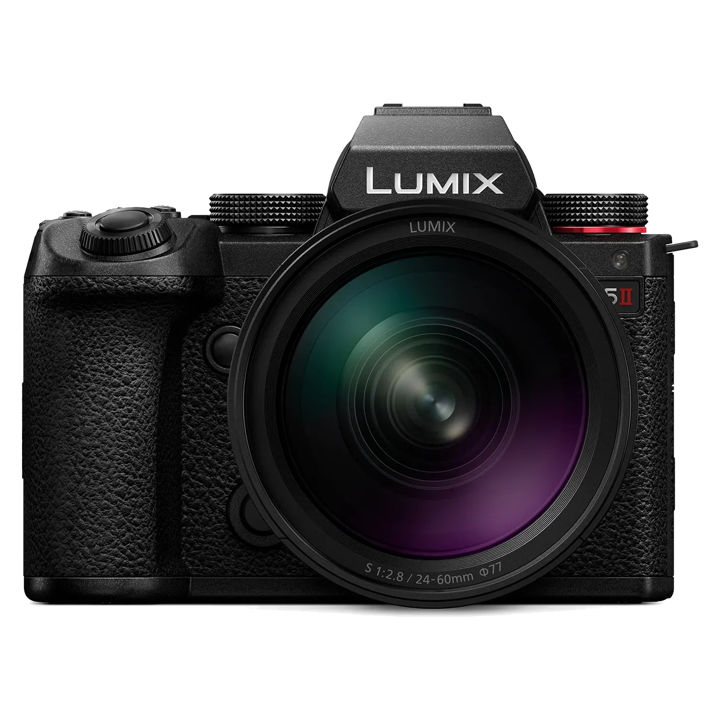
The camera market has a clear hierarchy and everyone knows it. Sony makes the cameras the professionals use. Canon makes the cameras everyone else uses. Nikon is there. And then, somewhere underneath all of them, Panasonic's Lumix system has been quietly making some of the best cameras available and getting very little credit for it.
The S5II is an embarrassment for its competitors, not because it does everything better, but because of what it does at the price it asks.
The hybrid problem
Let me explain. The S5II is a full-frame mirrorless hybrid, meaning it is designed to take both high-quality photographs and high-quality video without meaningfully compromising on either. This is a genuinely difficult engineering problem, and most manufacturers quietly pick a side. Sony leans photo. Panasonic Lumix has historically leaned video: their cameras have long been a favourite among filmmakers for their colour science and internal recording capabilities.
The autofocus that changed things
The S5II changed things for them. It added phase detection autofocus, which sounds like a technical footnote and is actually enormous. Lumix cameras had previously used a contrast detection system that was notoriously unreliable for anything that moved. Phase detection is how Sony and Canon built autofocus that feels almost telepathic. Putting it in the S5II meant you suddenly had a camera with filmmaking-grade video capabilities and modern, reliable autofocus, at a price point that undercuts the competition by a meaningful margin.
I bought it because I read enough reviews to convince myself it was the right call, and then spent a while looking for reasons it was not, because the price felt almost suspiciously good. I did not find many convincing ones. What you get is a camera that respects the fact that you might want to take a photograph in the morning and shoot video in the afternoon without changing your setup. The dynamic range is excellent. The colour science is beautiful straight out of camera. The in-body stabilisation means I can shoot handheld in low light and get frames that simply would not have been possible with a less capable body.
The underdog angle
The underdog angle is the part I find genuinely interesting. Lumix has been making cameras for decades, and for most of that time they have been treated as the third option. The L-mount system they developed, shared with Sigma and Leica, has given them an ecosystem that is now a serious alternative to Sony's E-mount. Slowly, reviewers who spent years opening with Sony recommendations are reconsidering. Slowly, the market share numbers are moving.
There is something satisfying about using technology that has not been correctly valued yet.
The S5II is not a secret, exactly. But it is the kind of camera you find by actually reading about cameras, rather than by walking into a shop and taking the path of least resistance. If you do the reading, the conclusion is almost always the same: for what it costs, the S5II does things nothing else does as well.
This is the camera I bought on a whim, with my first salary, half-convinced I was being irresponsible. It turned out to be the best decision I made that year. The underdog that, if you look closely enough, was winning all along.
Filed undercamerasgear