photography
A camera, and the art of paying attention
I blew my first proper salary on a camera I didn't know how to use. What it really bought me was a way to live more deliberately.
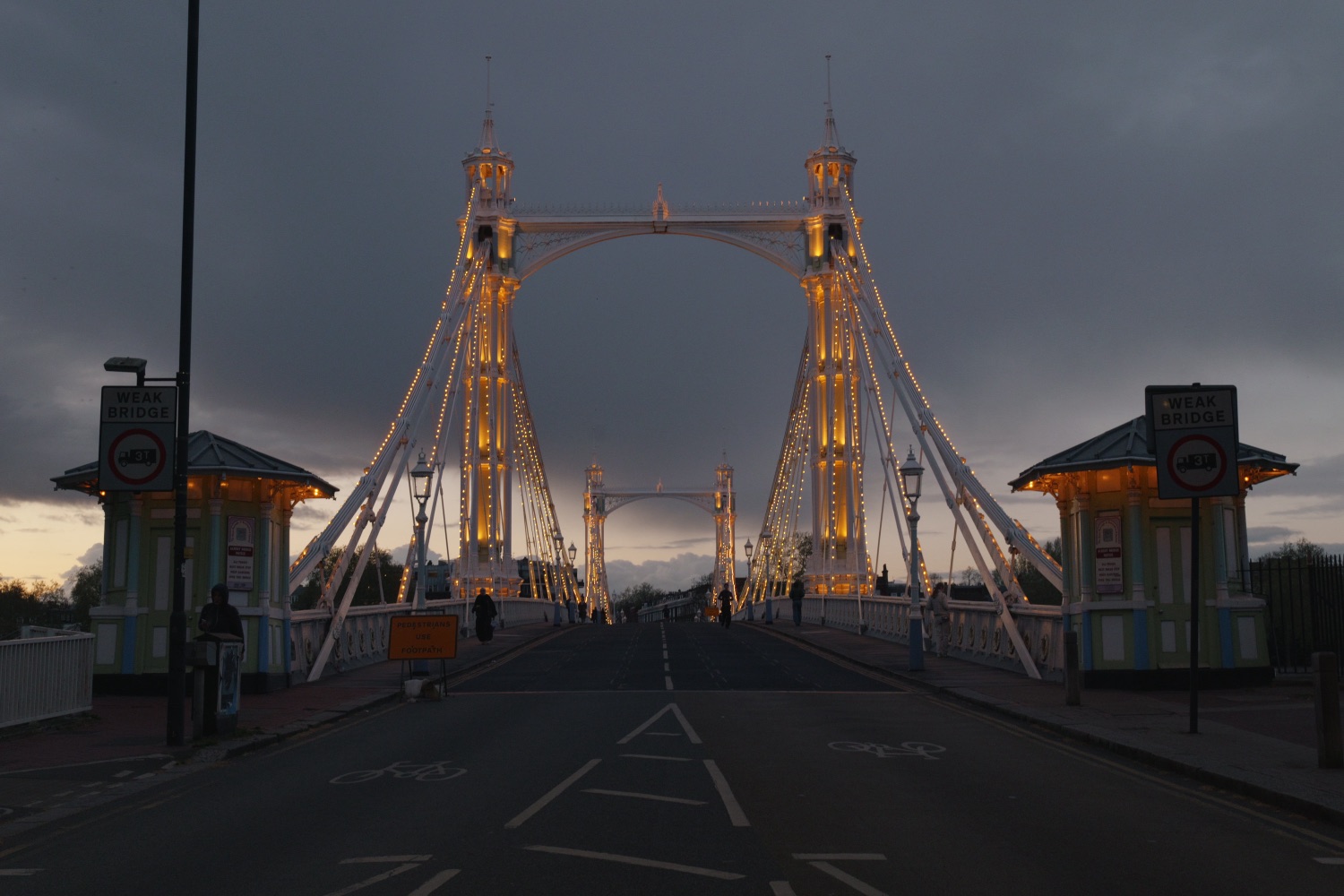
Is it a rite of passage that when you start work and make adult money for the first time, you have to blow it on something irresponsible? I thought I would be the exception: rational, measured, saving and investing as much as I could. Hyper responsible. But I wasn't. I bought a camera. And as a gear-head tech nerd, I didn't get a beginner camera. I went all out, fully irresponsible. As much as I would love to go through every spec and detail, that's not what this is.
I started my full-time job almost a year ago. And it sure is one hell of a transition, from the fun and careless freedom of university life to the mundane, repetitive grind of being a corporate rat. Since I was around 14, I'd wanted a camera, with an urge to create something, similar to the YouTubers I'd watch every day. Now making my own money, and going through a quarter-life crisis, buying a camera was an opportunity I struggled to pass up.
So the question is: was it a ridiculous waste of money?
In short: no. So far it has been the best money I have ever spent. Without exaggeration, it has profoundly impacted my life at a time I needed it most.
Why is that? I thought I'd buy a camera and instantly become Casey Neistat, creating vlogs and expressing myself. And I won't lie, I do feel quite a lot like Casey walking around with my camera. But there's something more profound it has done to me and my life.
Having my camera has not only given me a new personality and something to lug around everywhere I go. It has forced me into deriving more satisfaction out of life, during a time when I can look back at a week and barely remember what happened.
I think we can all somewhat relate to it: you start work and you realise just how precious your free time is, how little you actually have, and how you always happen to be exhausted during those few hours after work.
So what has this camera actually done for me, or am I just grasping at straws to justify a ridiculous purchase? Let's find out.
Walking like a Romantic
As a kid I hated going for walks. As an adult I've realised just how good they are for the brain.
While I have a nice flat, there's a limit to what I can photograph in here. So to use my camera I have to go outside and explore. On many days, after closing my work computer, I've decided to step outside without any real mission other than to be out there with my camera. Other times it's come with me on a day trip, or just into town, or on a train to somewhere slightly unfamiliar. And sometimes it's not even about the place. It's just that I want to bring it along when something is happening: a friend's birthday, a Sunday roast, a random evening where the light is perfect and everyone's laughing and I know I'll forget it if I don't catch it. It's small, but those moments add substance to my life because I'm actually doing something I care about, instead of just collapsing into the nearest screen.
The more I've done that, the more I've realised that what I'm doing — going for walks, wandering with a camera, paying attention to ordinary streets and bits of nature — is exactly the kind of thing the Romantic movement was obsessed with. In the late 18th to 19th century, the Romantics were reacting against a culture that was becoming very rational, industrial, and efficient. Their response was to say: feelings, imagination, and lived experience matter just as much as productivity. Meaning isn't only in grand historical events and big careers; it's also in a field, a path, a childhood memory, a single walk.
Poets like William Wordsworth found profound meaning in "moments of being" during solitary walks. His idea of "spots of time" was that a simple encounter — a field of daffodils, a hillside, a moment of stillness — can leave a lasting trace of joy on the mind. That's exactly what certain photographs become. One frame from an unremarkable evening can hold the entire feel of that phase of life. And it doesn't have to be dramatic. Sometimes it's literally just a kitchen table after dinner, or someone's face in the window light, and somehow that ends up being the shot that holds the most. Romantic art often celebrates rural scenes, humble peasants, solitary travellers, because the Romantics believed authentic feeling lives in these unpolished places.
William Blake captured their whole worldview in a few lines:
"To see a World in a Grain of Sand
And a Heaven in a Wild Flower,
Hold Infinity in the palm of your hand
And Eternity in an hour."
That's the Romantic credo: the infinitude of meaning contained in the smallest things, if we attend with imagination. When I go out with the camera after work and photograph a puddle reflecting the sky, or a row of buildings at dusk, I'm asking: can there be a whole world in this tiny scene, if I actually look? And when I'm travelling, it's the exact same question. Except instead of a puddle outside my flat, it's a street in a new city, or a train window, or that one moment on a trip where you stop and think: this is it, this is what I'm going to remember. The camera nudges me into that Romantic way of seeing: everyday life as something you're allowed to treat as sublime.
Paying attention like a Buddhist
Going outside is just the first part. The second thing the camera does is force me to focus on the moment in a way I never did before. When you're actually taking a photo, you are truly present. You're paying attention to light, shadows, what's in the background, whether someone is about to walk into frame. For those few seconds, everything else — work, emails, worries — gets pushed into the background. Even when you're with people, it does this. Not in a "let me film everything" way, but in a way that makes you notice: this is a good moment, don't let it pass without actually being here for it.
This is where it overlaps with Buddhist mindfulness. Buddhism, especially through mindfulness practice, teaches presence in each moment as the path to peace. A classic Zen description of enlightenment is simply: "When hungry, I eat; when tired, I sleep." The idea is that by giving complete attention to whatever we are doing, however ordinary, we uncover richness in it. Photography is just that idea with a lens attached. When I'm lining up a shot — on a walk, waiting for a tube, even just in my living room — I have to inhabit that exact moment fully. And when I'm away somewhere, or home visiting family, it's the same thing. I'm not just "there". I'm actually looking.
Thích Nhất Hạnh, the Vietnamese Buddhist monk and philosopher, often spoke of finding miracles in the ordinary. He famously said: "Drink your tea slowly and reverently, as if it is the axis on which the world revolves… Live the actual moment. Only this moment is life." Photography is like drinking the light slowly and reverently. Look at a patch of light, a corner of a street, a tiny detail, as if for a second the world revolves around it. Even something as simple as washing dishes, he said, can be a sacred act if you do it just to do it (feeling the warm water) instead of rushing through it. In a similar way, being behind the camera turns what would otherwise be dead time — a walk you barely register, a wait on a platform — into time you actually inhabit. It turns a "normal" afternoon with friends, or a quiet morning on a trip, into something you actually notice while it's happening.
The sweet pain of impermanence
On top of that presence, the camera has quietly become my way of dealing with something a bit heavier: the fact that everything moves so fast. Taking pictures, making these small weekend vlogs, is my way of documenting and remembering my life, trying to catch fleeting moments before they disappear. I'm in this strange phase where individual days can feel never-ending, but entire weeks vanish in what feels like seconds. I'll get to Friday and genuinely struggle to recall what I did on Tuesday. I'll see a sunset out of my window that is stupidly beautiful, and ten minutes later it's gone, and I'm left with this weird mix of awe and mild existential dread. I want to savour it longer, to look back and remember what it actually felt like to stand there in that exact light. I also live far away from my family, and part of me wants to give them an honest window into my life here: the small walks, the views, the things that make me happy for no real reason. The camera lets me do all of that. And when I travel, it's even more intense, because a whole place can become a blur if you don't slow down enough to catch it, and then suddenly you're home again, scrolling through your memory like it's a loading bar.
This is where the idea of impermanence comes in. In Buddhism they call it anicca, the fact that everything is in flux. Days end, seasons change, people move away, we grow older. On one level we all know this, but actually feeling it can be anxiety-inducing; we try to cling to moments even as they're slipping past. In Japanese thought there's this phrase mono no aware, the gentle ache that comes from recognising that things are beautiful precisely because they don't last. The poet Issa has a haiku that goes:
"This dew drop world –
Is a dew drop world,
And yet, and yet…"
The first line is the fact: everything is like dew, here for a moment. The "and yet" is the important part. He's saying: yes, it all vanishes, and yet we still love it, maybe even more because of that. That "and yet" is exactly what I feel when I'm out with the camera. This phase of my life — this job, this flat, this city, this age — is a dew drop. So are trips, visits home, even certain friendships in certain seasons of life. You don't know when something will become "the last time" until it already is. And yet, that's precisely why I want to actually see them, instead of numbing myself and waking up five years later.
A lot of philosophical and spiritual traditions basically agree on this: if there's one constant in life, it's that nothing stays the same. That can be terrifying if your only goal is to hold on, but if you accept it, it can become the very thing that gives life its intensity. The fragility of each moment is what makes it precious. "This too shall pass" applies to the bad, which is comforting, and to the good, which is a reminder not to sleep through it. When I film a sunset, or a Sunday morning coffee, or a quiet train ride, I'm not trying to freeze time forever. I'm just saying: I know this will pass, so let me at least meet it fully, and give myself a way to revisit it later. And when it's a weekend away, or a night out, or just being in the same room as people I love, that becomes even more true, because those are the moments that disappear fastest.
John Keats, in his Odes, savours the fact that beauty is momentary. "Beauty that must die," he writes, is sweeter for its mortality. There's a kind of sweet pain in noticing something beautiful and knowing you're already losing it. I get that exact feeling filming a nice evening or photographing a sunset: I'm happy in the moment, but there's also this quiet awareness that I'm capturing something I'll never get back in the same form again. Weirdly, that makes me love it more, not less. Because I can come back to it, the moment isn't lost. And it applies to people too. Sometimes it's not the view I'm scared of forgetting, it's the way someone looked at the table when they laughed, or the vibe of a room when everyone's together.
And then there's Proust, who more or less built an entire novel on the idea that fleeting sensations can unlock whole worlds of memory. In In Search of Lost Time, it's the taste of a madeleine soaked in tea that suddenly brings back an entire childhood. In a much less literary way, that's what looking back at photos and clips does for me. A two-second shot of my desk in winter light, or of walking across a bridge at night, can pull up the whole emotional world around it: what I was worrying about at the time, what I was hopeful about, the general "weather" of that period of my life. That mix of "it's gone" and "I can still feel it" is exactly the sweet pain of impermanence. Sometimes it's literally a clip from a trip, or a low-quality video from someone's living room, and it brings back the entire feeling of that day in one second.
A lot of Japanese art leans into this. Haiku, for example, tries to capture a fleeting insight or scene in just a handful of syllables: a frog jumping into a pond, the sound fading after temple bells, a single moment in a particular season. By writing it down, the poet honours that tiny slice of reality, saying: this was worth noticing. In a way, the highest art is just being present while the moment is actually happening. But if you're not always able to do that perfectly, photographs and short videos can act as little time capsules, helping us remember what it felt like, and reminding us how rich even small, supposedly "uneventful" days can be. And when you live far from people you love, those time capsules become a way of staying connected, not just telling them what you did, but showing them what it felt like.
I read once that every moment is like a soap bubble: it will burst, yes, but while it floats it reflects the whole rainbow. If you focus on the inevitable burst, you miss the beauty; if you pretend it will last forever, you're fooling yourself. But if you simply watch it drift and shine, you are fully alive to it. That is the mindset of savouring impermanence.
For me, the camera isn't a way to deny that the bubble will burst. It's a way of saying: I saw it. I was here for it. And here's a little fragment I can hold onto when it's gone. And if I'm lucky, it's also something I can hand to other people. Like: look, this was my life for a minute. As someone who has moved around a lot, this helps me come to terms with the impermanence of my surroundings, because I know I can always look back at them. They will never be forgotten.
Choosing what to pay attention to
This is where all the theory comes together with something David Foster Wallace talked about: attention as the core of how we experience adult life. In his famous commencement speech, he describes a very familiar scene: you finish a long day at work, you're tired, you're stuck in traffic, you have to do the food shop, you end up in a crowded supermarket under harsh lighting, and everything in you wants to be annoyed. The default reaction is: this is hell, everything is in my way, everyone is stupid and slow. That's what he calls the default setting.
What he says, though, is that real freedom "means being conscious and aware enough to choose what you pay attention to, and to choose how you construct meaning from experience." You can stay in that default mode, or you can, in the exact same supermarket, look around and notice: everyone here is tired. Everyone here has a life. The person taking ages in front of you might have had a worse day than you. The cashier has been standing there for hours. Suddenly the scene hasn't changed at all (same bad lighting, same queue) but what it means to you is completely different. A place that felt like a personal hell can become an occasion for empathy, or at least a bit less self-obsession.
His point is that attention is powerful enough to transform reality from the inside out. The outside world doesn't change, but your experience of it does.
That's exactly why the camera has been so helpful. Starting full-time work made it very easy for life to slide into that default mode, where days are just things to get through, and every delay or irritation feels like an attack on your time. Picking up the camera is my way of refusing that. When I take it out after work, or bring it on a small trip, I'm deciding in advance: I'm going to look for something here that's worth seeing. I'm not going to let this be just "another Tuesday" or "another commute." And when I'm travelling or with people, it's the same decision: not to sleepwalk through a moment I'll later wish I'd paid attention to.
Once I've taken the photo, the day has a shape. It becomes "the evening the sky turned orange over the Thames," or "the evening I tried to capture the full moon and failed," or "that laundromat that looked weirdly like a film still." Or it becomes a trip I can replay properly, or a visit home I can actually hold onto, or a random night with people I love that I would otherwise forget in the blur. Nothing about the external world has changed (same office job, same streets, same routines) but my relationship to it has. And that, to me, is the whole point.
Having my camera gives me an excuse to do things intentionally, and to actually catch some of these fleeting moments so I can remember my weeks and the time I spent on this earth. One day, when I'm old and romanticising my twenties, I like the idea that I can open a hard drive somewhere and step back into these days through the pixels I made now, not perfect versions of my life, just honest ones. And it won't just be my life, it'll be the people in it, the places I went, the versions of us that only existed for a season.
So yes, on the surface, I blew my first proper salary on a camera I didn't even know how to use. But underneath that, what it's really done is give me a way to live a little more deliberately: to walk like a Romantic, to pay attention like a Buddhist, and to choose my focus in the way David Foster Wallace was talking about. It nudges me outside, it pulls me into the present, it gives me a way to express what my life actually feels like right now, and it keeps a small creative flame going in a season where it would be very easy to fall into a routine.
All I'm really doing is choosing to look. But for a life that could so easily dissolve into spreadsheets and emails and forgotten weeks, choosing to look turns out to be not a small thing at all.
Either that, or this is the most overthought justification for an expensive camera you've ever read.
Filed underphotographyphilosophyessay